
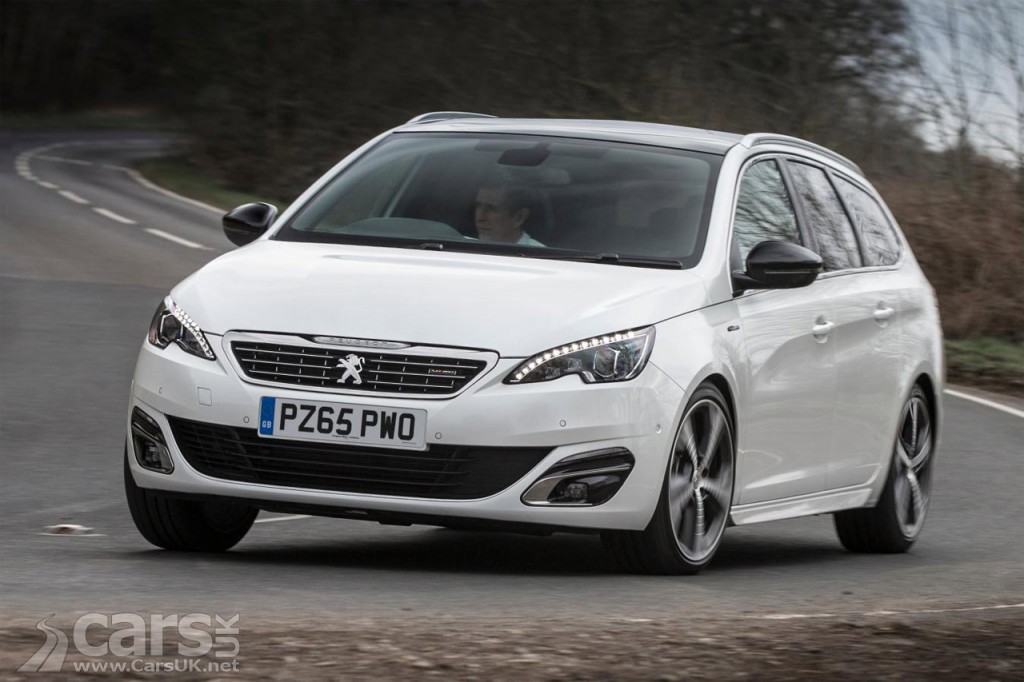
The Peugeot 308 (pictured) has economy 36% poorer in the real world
PSA Peugeot Citroen has revealed the first results of its ‘Real World’ fuel economy test, with figures showing economy up to 36% poorer.

Now, PSA has developed a protocol in conjunction with non-government organisations Transport & Environment (T&A) and France Nature Environment (F NE) to come up with the right numbers, with results verified by Bureau Veritas.
The test were done on public roads near Paris in real world conditions, including with passengers and luggage, as well as on different road gradients and use of HVAC systems.
The first results are for the Peugeot 308, Citroien Grand C4 Picasso and DS 3, all fitted with the 1.6 BlueHDI 120 engine with stop-start, and PSA has not only delivered their test figures, but also economy figures from owner reviews. They are remarkably similar – but a long way off the ‘Official’ economy test results.
PSA Peugeot Citroen Real World Economy Results
Peugeot 308 Allure
- PSA Real World: 56.5mpg
- Owner Survey: 55.4-56.4mpg
- Official: 88.3mpg
Citroen Grand C4 Picasso
- PSA Real World: 50.4mpg
- Owner Survey: 49.6-51.4mpg
- Official: 70.6mpg
DS 3
- PSA Real World: 57.6mpg
- Owner Survey: 53.3-55.4mpg
- Official: 78.5mpg
Unsurprisingly, the real world results are significantly poorer – by up to 36 per cent on the Peugeot 308 – but are pretty much what we’d expect to see with a review car used in the real world.
It’s a big step in the right direction to restore car buyers’ faith in the claims of car makers, but we’re disappointed to see PSA hasn’t included CO2 data (although you can extrapolate CO2 emissions from the MPG), and nor have they given NOx and Particulate figures.
But it’s a step in the right direction.

Have your say - leave a comment