
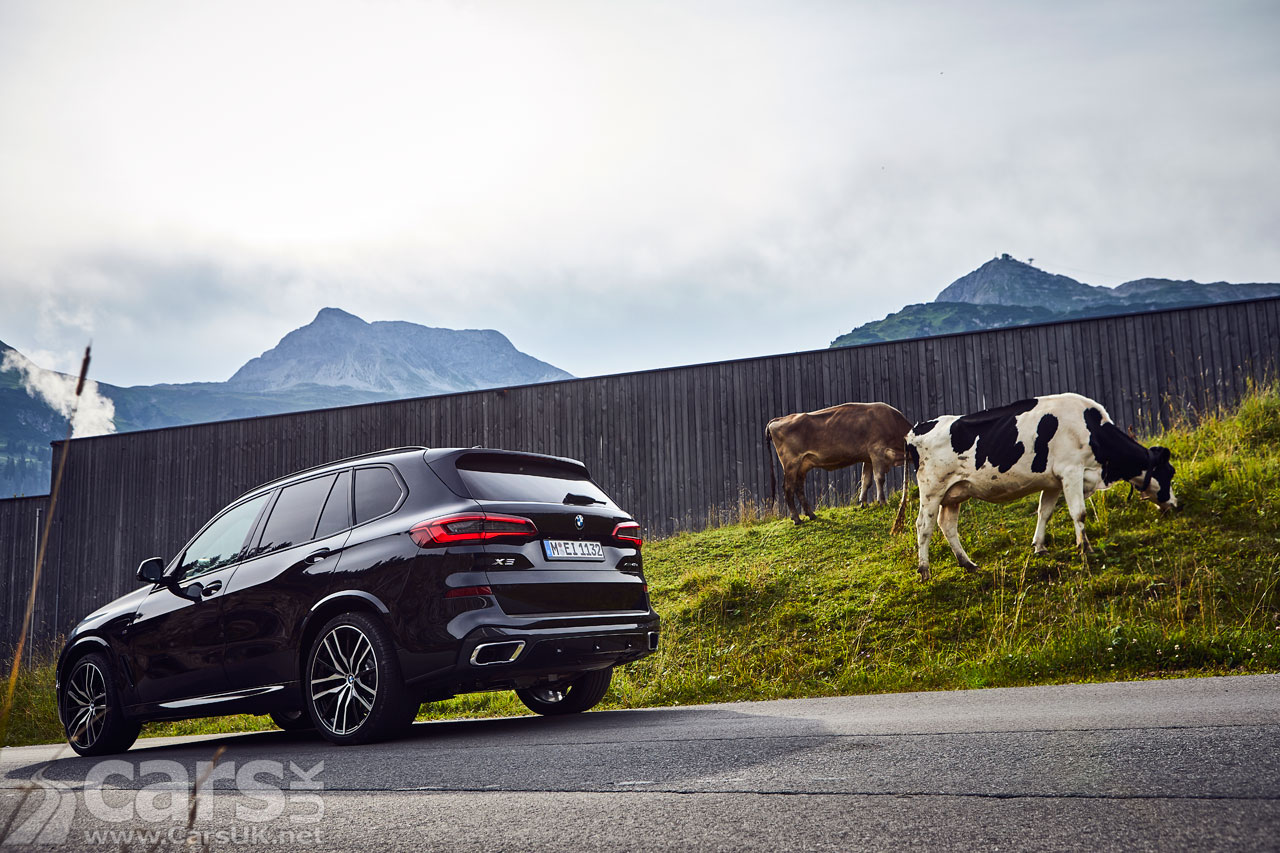
BMW X5 xDrive45e Plug-in Hybrid
Subsidies for plug-in hybrid cars in Europe should end say campaign group as they are far more polluting in the real world than stated.

But as we’ve pointed out umpteen times, PHEVs do come with completely bonkers official emission and economy figures thanks to the way they’re tested, and none come close to achieving official figures in the real world.
Of course, the big driver for plug-in hybrids in the UK, apart from those not willing to commit to an actual EV, is the low BIK rate business use attracts, which means a sizeable chunk less tax is taken by HMRC than a comparable ICE version.
With that in mind, it’s no surprise to find European campaign group Transport and Environment (T&E) calling for governments across Europe to end subsidies for PHEVs, and they’ve done some real world testing to back up their call.
Tests were run on the BMW’s X5, Volvo’s XC60 and Mitsubishi Outlander and found that, even in perfect conditions with a fully-charged battery, they emitted 28-89 per cent more CO2 than official figures, and if the battery was drained that rose to 300-800 per cent.
Julia Poliscanova, T&E Director, said:
Carmakers blame drivers for plug-in hybrids’ high emissions. But the truth is that most PHEVs are just not well made. They have weak electric motors, big, polluting engines, and usually can’t fast charge. The only way plug-ins are going to have a future is if we completely overhaul how we reward them in EU car CO2 tests and regulations. Otherwise PHEVs will soon join diesel in the dustbin of history.
We can see the point, but if governments suddenly stop giving tax breaks for PHEVs then the already beleaguered car industry will be hit hard as they’re so geared up to delivering PHEVs to replace diesel and, more importantly, reduce their average emissions.

Mark Geller says
Bunk. Phev’s are a gateway to all electric. In addition, the mileage increase is significant, especially for those who only use 20 or 30 miles a day. Any limitation should be that you need to prove you have a place to plug in. Itherwise, l agree, you shouldn’t be able to buy it, but that will not be palatable to those who can’t afford to live where there is a plug.