
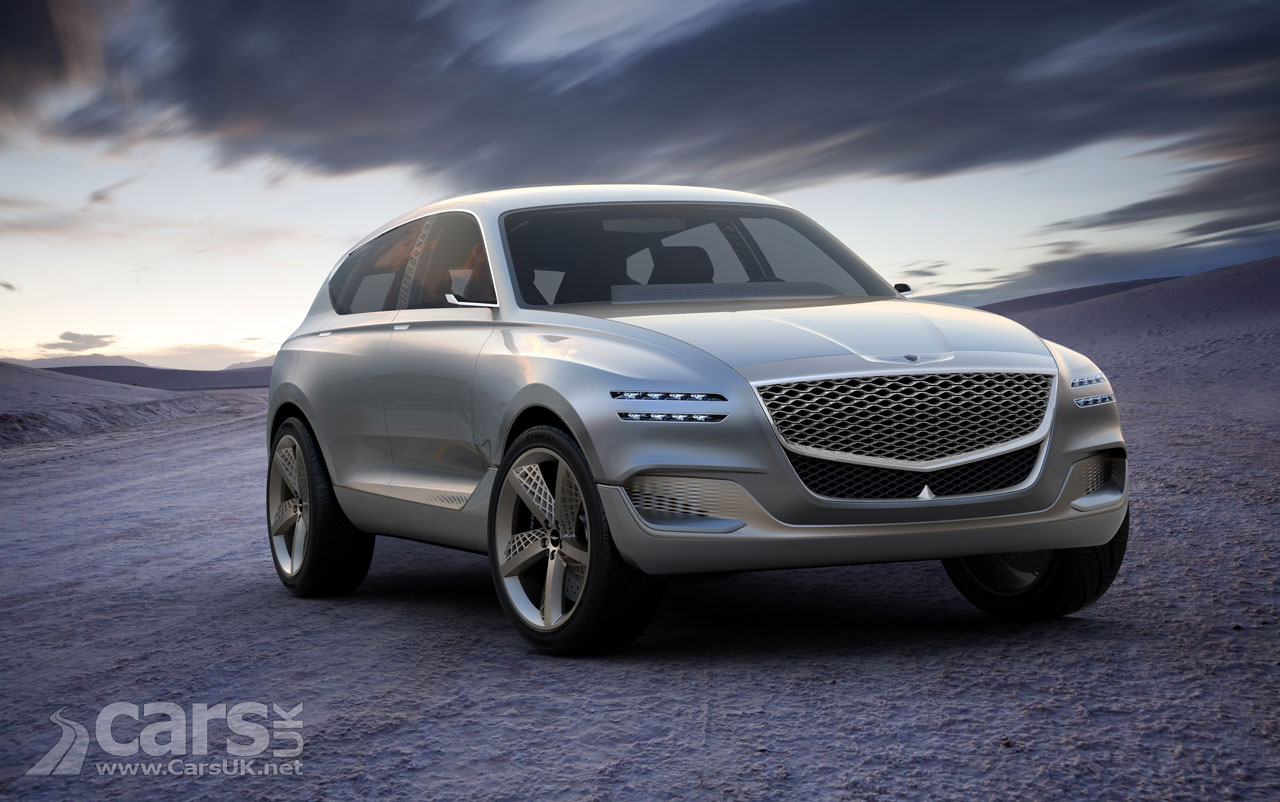
Hyundai’s Genesis GV80 SUV Concept is a plug-in hydrogen fuel cell car
The Genesis GV80 is a plug-in hydrogen fuel cell powered SUV concept which has debuted at the New York Motor Show, complete with new design cues.

But apart from the current high cost of producing hydrogen-cell cars, the big obstacle is a refuelling infrastructure, and there’s no easy answer to that.
It’s taken a very long time for any sort of electric recharging infrastructure to develop in the UK (and anywhere, really) and even now it’s hardly ubiquitous.
That has put people off EVs, especially as they still have a relatively woeful range and an equally woeful recharging time. And until battery technology catches up nothing is really going to change.
Hydrogen-powered cars face a bigger obstacle in developing a refuelling infrastructure, as the cost is far higher, but they do have the advantage of delivering a much bigger range than EVs and a refuelling time comparable to an ICE.
 Now, Hyundai seem to be trying to find a way round the problem by doing what car makers have done with EVs – tempt buyers in with a plug-in.
The Genesis GV80 is a concept for a big SUV and has debuted at the New York Motor Show. It’s showcasing a future SUV from Genesis as well as a new ‘smooth’ design language, big screens inside, lots of leather and thumping great alloys.
It’s probably aimed at cars like the Lexus RX, BMW X5 and even Range Rover Sport. But it has a unique power source – a plug-in hydrogen fuel cell.
What we don’t know, because Hyundai aren’t saying, is how this plug-in hydrogen fuel cell setup works.
Is it basically a BEV with a big load of batteries which can be topped up by the fuel cell when the charge runs out – like a range extender – or is it a fuel cell car with a small bank of batteries to give you a 30 mile or so pure EV range from the plug-in?
Are Hyundai setting it up for the fuel cell to charge the batteries, or is the fuel cell driving the electric motor directly?
Whatever the answer is, it’s going to be interesting to find out if it offers a possible solution to encourage the uptake of fuel-cell powered cars.
But it does sound an expensive solution, whatever it is.

Have your say - leave a comment