
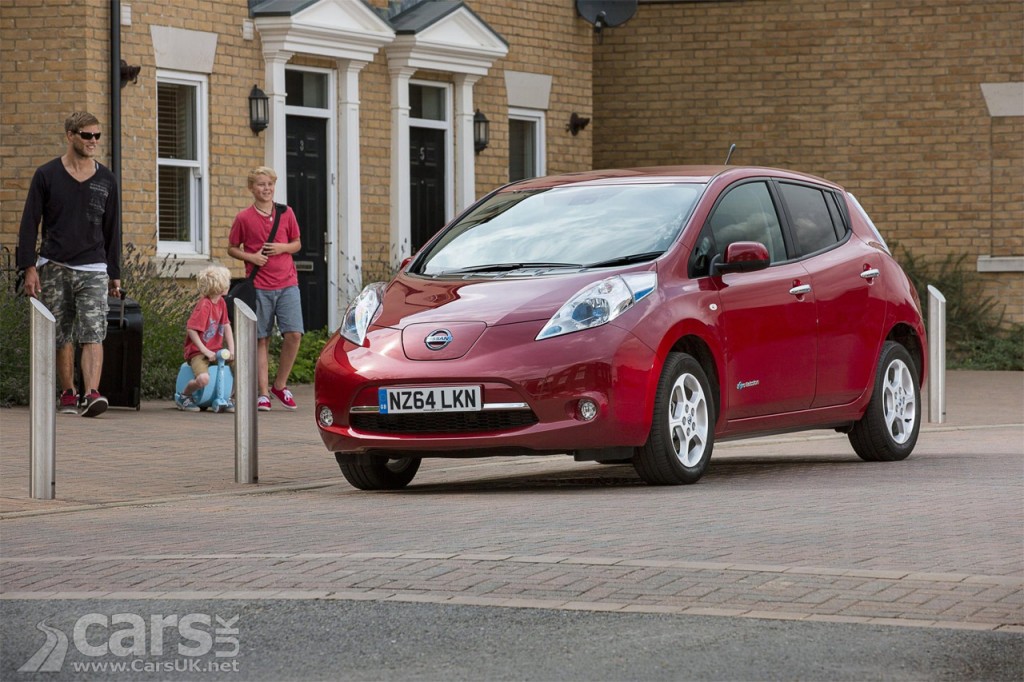
Nissan LEAF EV loses TWO THIRDS of its value in first 12 months
The electric Nissan LEAF may be the UK’s best-selling BEV, but if you buy one new you can expect to lose 66 per cent of your money in the first year.

Yes, until numbers of electric cars are significant (which may never happen) refuelling your car with cheap electricity (or even free in some cases) is easy, although if EVs are ever a significant portion of cars on the road you can bet your boots electricity for cars will be taxed just like petrol and diesel.
And there’s the issue of maintenance too, which on an EV with far fewer moving parts means much lower service costs, Another big plus on the pros and cons list for an EV.
But as all buyers know, it’s not the cost of running a car day to day with fuel, maintenance, service etc. that hurts, it’s the depreciation that’s the killer. And it seems EVs are just about the worst depreciating cars there are.
According to Glass’s – the used car value bible people – A Nissan LEAF E will lose a whopping 66.77 per cent of its value in the first year alone, which means your ‘cheap to run’ LEAF will actually cost you more than £1,000 a month in depreciation.
We’ve highlighted the LEAF’s depreciation because it’s the best-selling EV, but there are other EVs with even worse deprecation, like the Renault Fluence which is worth just 27.21 per cent after a year and the Citroen C-Zero worth just 32.07 per cent.
So if you are tempted to grab an EV for running local errands, do your self a favour – let a company buy take the first year hit and grab a year-old EV for a fraction of its new price. Then you really will have cheap motoring.
But whatever you do, don’t buy a new BEV.

ricegf says
Is the depreciation calculated from list price or from the actual price paid after the “Government bribe fund for ULEV”? If not the latter, then the rate calculated has no meaning in a heavily subsidized market, for what I trust are painfully obvious reasons.
Cars UK says
It’s worked out on list price before the subsidy as that’s the real depreciation, and with the ULEV grant likely to run out in the coming months it’s the only way to show the real cost to owners.
ricegf says
OK, maybe not painfully obvious then. 😀
Once subsidies end, “cheap” new cars return to their normal price. This makes used cars much more valuable, by as much as the subsidy itself. Unusually high depreciation ends. Voila.
An example.
If a new car is priced at 21.5k after subsidy, I won’t pay the normal residual of 19k. I’ll expect 14k, or I’ll just buy a new subsidized car. (Real example, BTW – and I got it for 14k.)
If the unsubsidized price is 31k, then the normal residual of 19k is perfectly reasonable to those who want the car.
This is a well-documented side effect of subsidies for depreciating assets, which is why I thought it obvious. Hope this helps clarify what’s really happening in the (currently subsidized) EV markets.
Cars UK says
As much as anything, it demonstrates that buyers are not prepared to pay anything close to the list price for an EV. In fact, pre-reg LEAFs with just a handful of miles are clogging up Nissan main dealers for as little as £13k. A truly distorted market, not helped by the subsidies.
ricegf says
Well, they have sold over 200,000 cars – almost certainly helped by the subsidies. 🙂
But I agree that EV pricing for a 200+ mile range EV needs to get roughly to parity with ICE vehicles of comparable quality, and a reasonable fast charging infrastructure completed along major highways, before EVs will compete well against and hold their value similar to gas cars.
If the current rate of advance of battery tech continues, that’s probably around 2020 or so.