
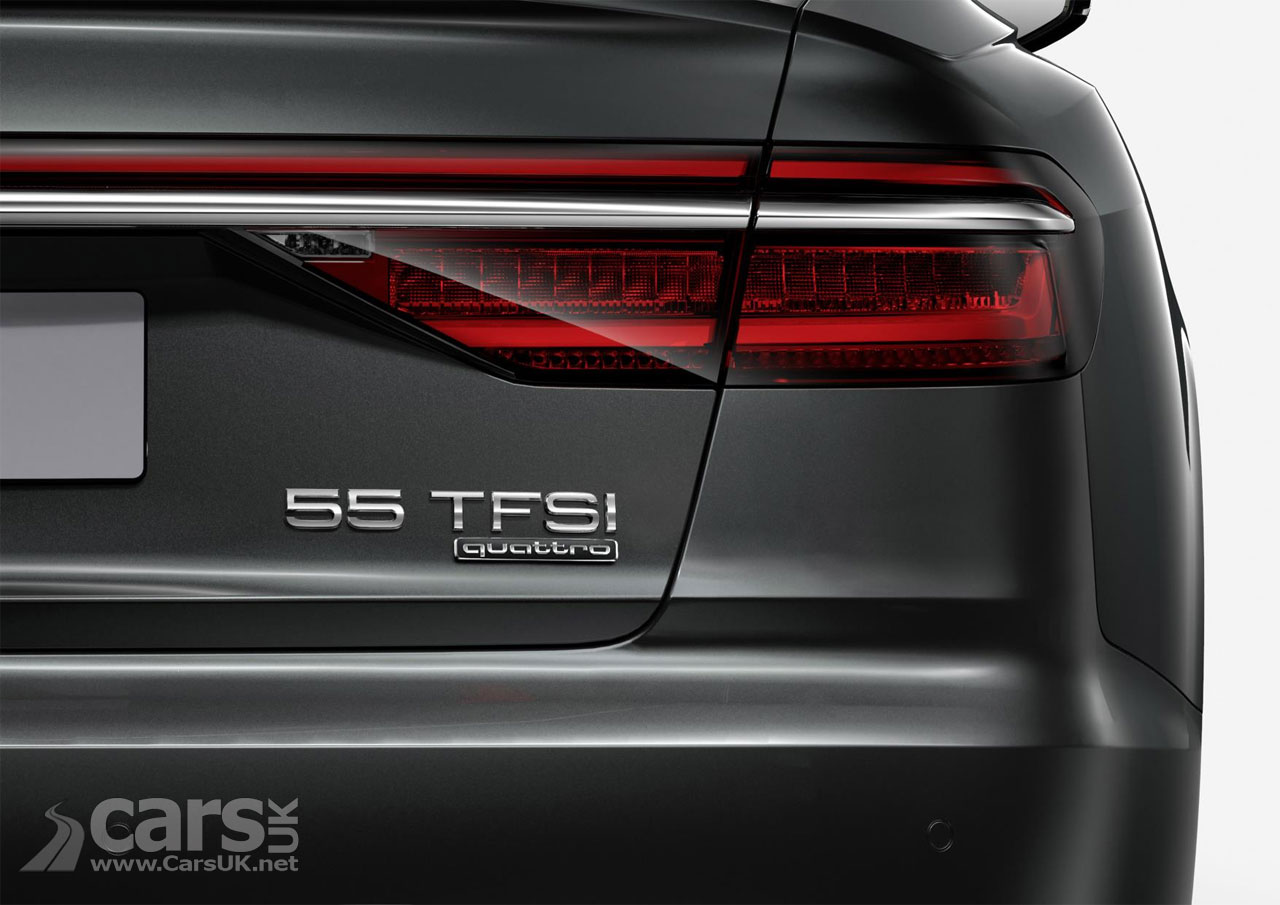
Audi adds numbers to its model designations so you know how powerful they are. Really?
Audi are adding numbers – from 30 to 75 – to the model designations on the back of their cars to add ‘clarity’ to the performance offered across a range of powertrains.

Downsizing of engines – and turbos and superchargers – have made cars more powerful than the engine size might suggest, so Audi has formed a committee to fix the problem. Or at least we assume it’s a committee, because no sane individual would come up with the solution they’ve decided on.
From now on, every Audi will get a number attached to its model badge on the back of the car – ranging from 30 to 75 in increments of five – which denotes a power output band.
So, for example, it all starts with ’30’ – as in Audi Q2 30 TFSI – to denote and engine with a power output of between 109bhp and 129bhp going up in increments of five to ’70’ denoting power above 536bhp.
Added to this is the source of the car’s power – TFSI, TDI, g-tron or e-tron – so you end up with badges like Audi Q7 50 TDI.
It’s supposed to add ‘clarity’ to the whole model designation thing, but Audi are excluding S and RS models – and the R8 – from the new designations.
It’s all as clear as mud.

Have your say - leave a comment