
Be careful what you’re thinking – JLR plans to read your mind.
Jaguar Land Rover is developing technology to read drivers’ minds to monitor alertness through brainwaves to cut accidents and improve safety.

But it’s still interesting to see where technology may take cars, although we think it likely that much of it will become irrelevant once the car is the driver, rather than the flawed human behind the wheel, which could well happen before Jaguar Land Rover’s latest ‘Brainwave’ is production viable.
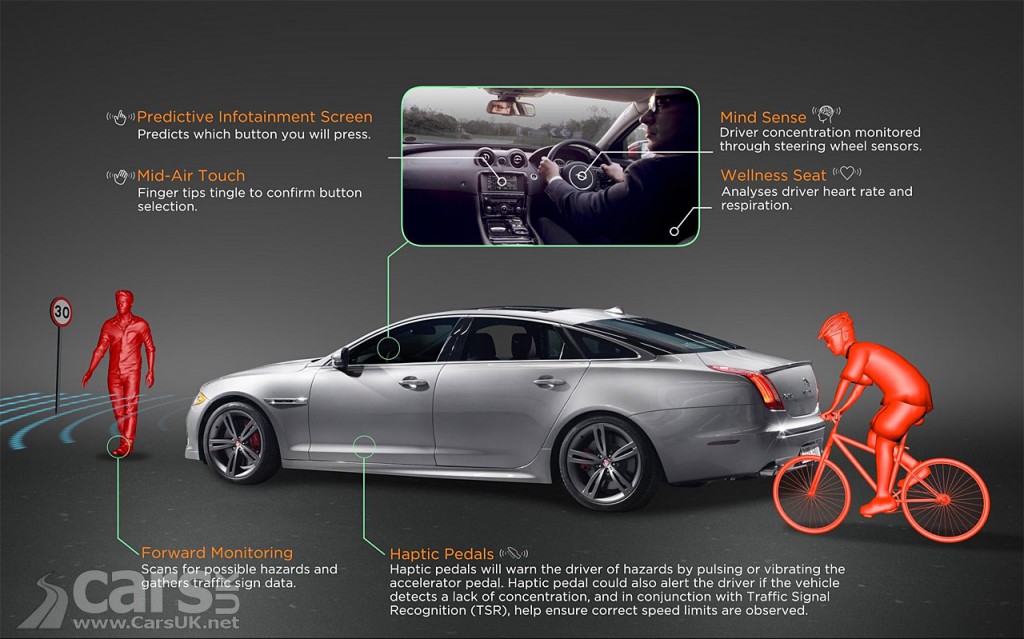
The latest JLR future research direction to be revealed is ‘Mind Sense’, a project researching how brainwaves can be used to monitor driver concentration and take action to keep the driver alert.
Of course, we already have similar systems – like the Mercedes Coffee Cup – which monitors drivers for erratic or slow responses and gives them a nudge with a bit of vibration, but the JLR route is, perhaps, a better way to go, with plans to scan the four or more brainwaves we emit to look for variations and, if the driver looks like he’s drifting, bring him back with a touch of vibration.
Thankfully, JLR reckon you won’t have to wear a silly headband whilst you’re driving so the car can check your brainwaves, but that they’ll be able to monitor your brainwaves through sensors embedded in the steering wheel. Which is just as well; we can’t see drivers taking kindly to looking like a lab experiment as they go about their business.
Also in the mix is ‘Driver Wellness Monitoring’, which detects vibrations from the driver’s heartbeat and breathing to detect if they’re about to keel over, and also tracks levels of stress, to add another layer of safety.
It’s all very clever, as we’ve said before about other JLR innovations in the planning, but much of it will surely be made redundant if fully autonomous cars arrive first?

Have your say - leave a comment