
Jaguar has revealed the ten most important cars from its history – chosen by a trio of Jag lovers – to celebrate the launch of the new Jaguar XE on 8 September 2014.
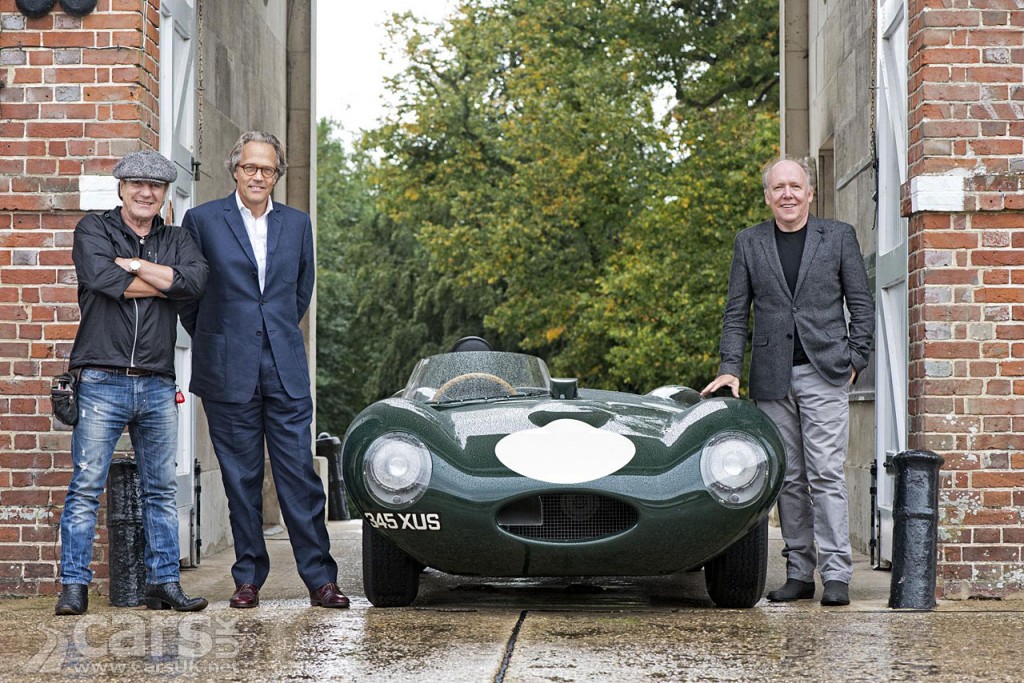
Messrs Callum, Johnson & March chose the Top Ten Jaguars
[nggallery id=1936 template=customlinks]
Tomorrow – 8 September 2014 – sees the launch of the car that could make Jaguar a real force in the ‘Premium’ market – the new Jaguar XE.

The list kicks off with a 1930s Jaguar – the Jaguar SS100 – and goes on to include the Mark 2, C-Type, D-Type, E-Type, the original XJ6 and the Le Mans winning Tom Walkinshaw XJR-9.
It does seem, with the exception of the racing and specials of the 1980s, this particular trio of Jaguar lovers see Jaguar’s real iconic heritage stopping when Jaguar revealed the XJ6 in 1968, and in truth most Jaguar lovers probably feel much the same. The unstated conclusion is that the current crop of Jaguars – like the F-Type and XE – will be the iconic heritage cars of the future.
Interestingly, both Ian Callum and Brian Johnson agree that it’s tyhe C-Type that is the perfect heritage Jaguar, with a slight dissention from Charles March.
Ian Callum said:
The shape of the C-type has a simplicity and purity that have rarely been bettered, and have helped form the beauty and elegance of some many subsequent Jaguar models. It’s a gem.
Brian Johnson’s thoughts were very similar. He said:
The Jaguar C-type takes some beating for me. Its purity and speed are exceptional today, and must have been simply mind-boggling in the early 1950s!
But Lord March had a slightly different point of view. He said:
For me it has to be the D-type. Way ahead of its time, the D-type looks as good today as it did when it was first revealed 60 years ago, and I really can’t wait to see a grid full of D-types racing at this year’s Goodwood Revival in mid-September to mark this landmark anniversary in style.
All the Top Ten Jaguars will be on show at the new XE’s launch at Earls Court on Monday. And all are agreed that it’s the 1940s and 1950s Jaguars that made the brand.
Jaguar Top Ten Cars
- SS100: Jaguar’s first 100mph production car.
- XK120 – registration NUB 120: Perhaps the most famous XK120 in the world. Driven by Ian Appleyard and Pat Lyons (daughter of Sir William Lyons) to numerous rally wins in the 1950s, including the Alpine Rallye des Alpes in 1950 and 1951.
- C-type, registration NDU 289: Original entry in the 1953 Mille Miglia, and one of just 54 cars built.
- D-type, registration 393 RW: This penultimate D-type won the 12 hours race at Reims driven, by Hamilton and Bueb, and was sixth at Le Mans with the same driver pairing.
- MK II: A great example of the legendary sporting saloon for which Jaguar has become globally renowned, and the genesis of the brand-new XE.
- E-type, registration 77 RW: The Jaguar ‘Works’ press car, famously driven overnight by Norman Dewis to Geneva for its Motor Show debut to great fanfare. This was the first production Jaguar to reach 150 mph, and is the earliest surviving E-type Roadster.
- XJ13: Only one example of this car was built, being the first Jaguar to use the V12 engine. The XJ13 was built for – but never raced at – Le Mans, and was designed by Malcolm Sayer.
- XJ6 S1: Car of the Year when launched in 1968, this particular XJ6 was Sir William Lyons’ personal car.
- TWR XJS: Tom Walkinshaw was very successful in motorsport for Jaguar in the 1980s and returned Jaguar to the podium with the racing version of the legendary XJS winning the European Touring Car Championship.
- XJR-9. Tom Walkinshaw won Le Mans in 1988 with this very car, in one of Jaguar’s seven victories in the famous endurance race.

Have your say - leave a comment